
AI Marketing: Key Insights for Small Businesses
AI Marketing, Targeting, Answer Engines, AEO, Small Business Growth
When AI Chooses Who Gets Recommended: What Businesses and Agencies Must Know Now
AI is quietly deciding which brands show up, which offers get surfaced, and which businesses never get seen. If you run a small business, agency, or service-based brand, understanding how AI chooses who gets recommended is no longer optional—it’s survival.
At DW Conceptz, we see it every day: entrepreneurs doing “all the right things” on social media, SEO, and ads—yet AI systems still recommend their competitors first. Why? Because today’s visibility is shaped by AI targeting and answer engines, not just keywords and followers.
From ChatGPT-style assistants to Google’s AI Overviews, TikTok search, Amazon product suggestions, and Meta’s end-to-end AI ad tools, algorithms are constantly deciding: Who should we recommend for this question, this need, this moment? If your brand isn’t optimized for those decisions, you’re invisible—even if your work is excellent.
That’s where Answer Engine Optimization (AEO) and frameworks like ARCHITECT™ come in: they help you speak to both people and algorithms so AI actually chooses you as the recommendation.
Before we break down how AI chooses who gets recommended—and how to position your brand at the top of that list—start by understanding your current visibility baseline:
How AI Actually Chooses Who Gets Recommended in 2026
By 2026, AI is no longer a “nice to have” in marketing—it’s the operating system. Reports from Forbes, Gartner, and McKinsey all point to the same reality: AI systems now drive targeting, personalization, and recommendations at scale. For marketing agencies, Jasper’s 2026 data shows over 90% of teams are using AI, and budgets are rising year over year.
When an AI system—whether it’s a search assistant, social algorithm, or ad platform—decides who to recommend, it leans on a few core capabilities:
Data analysis: AI ingests massive amounts of behavioral, contextual, and content data to understand what works for which audience segments (Forbes, 2026).
Machine learning & predictive analytics: Models predict which brand, offer, or answer is most likely to satisfy a specific query or intent (Gartner, McKinsey).
Hyper-segmentation: AI creates micro-audiences based on behavior, preferences, and context, then matches them with the “best-fit” content or business.
Real-time optimization: Recommendations shift live based on performance, engagement, and fresh signals—what worked last week may not win today.
Ethical and fair AI: Leading platforms are under pressure to reduce bias and improve transparency, which means clear authority signals and accurate entity data matter more than ever.
📌 Key Takeaway: AI is not “guessing.” It is ranking and recommending based on patterns, performance, and how clearly it understands who you are, what you do, and who you serve.
From Search to Answers: Why AEO Matters More Than SEO Alone
Traditional SEO was about ranking on a page of blue links. Today, AI-powered answer engines (like ChatGPT, Perplexity, Google AI Overviews, and platform-native assistants) skip the list and jump straight to: “Here’s the answer. Here’s the business. Here’s what to do next.”
Generative Engine Optimization (GEO) and Answer Engine Optimization (AEO) are the evolution of SEO. Instead of just optimizing for keywords, you’re optimizing to be:
The trusted source an AI cites in its answer
The business recommendation it suggests when someone asks “Who should I hire for…?”
The entity it recognizes clearly—your brand, your services, your niche, your location
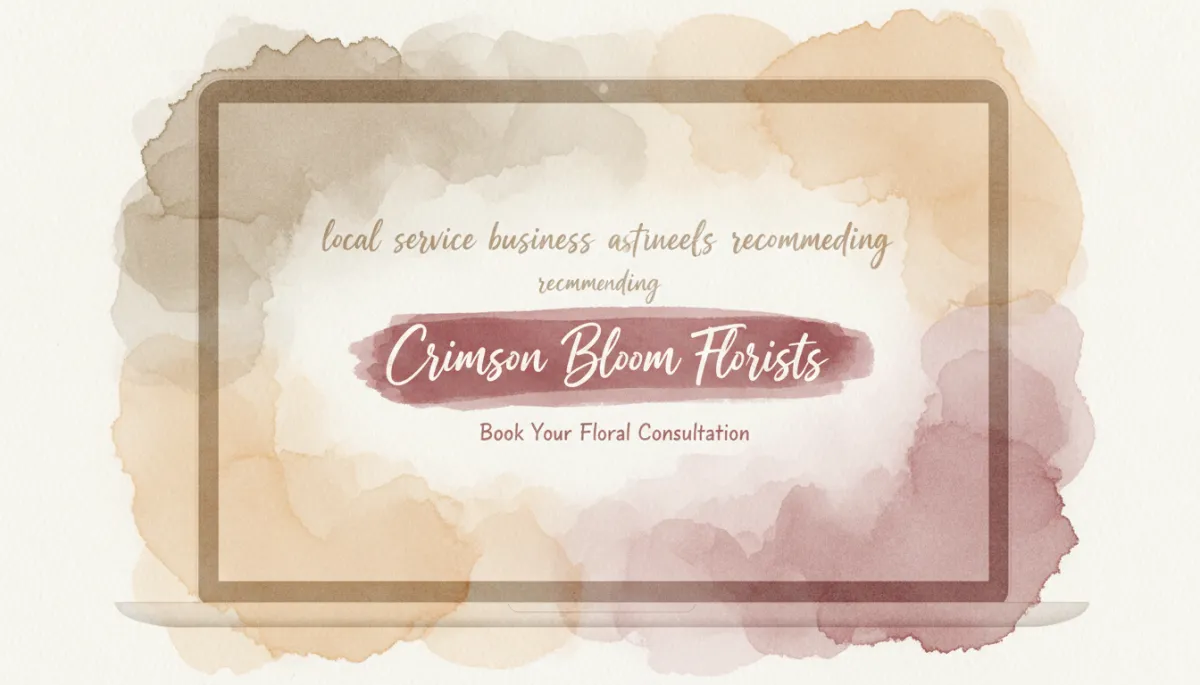
Answer engines now choose a few trusted brands, not endless pages of links.
For entrepreneurs, small businesses, and agencies, this is both a risk and an opportunity. If your visibility strategy is still built solely around blogs and keywords, you’re under-optimized for how AI actually works in 2026. DW Conceptz focuses on AEO because we’ve seen how quickly AI-native brands can leapfrog older, bigger competitors simply by speaking AI’s language more clearly.
The ARCHITECT™ Framework: A Roadmap for Being the Brand AI Recommends
To help businesses navigate this shift, Daisy Watkins developed the ARCHITECT™ Framework—a proprietary methodology used at DW Conceptz and Lumapath.ai to optimize visibility across AI-powered answer engines. Instead of guessing what algorithms want, ARCHITECT™ gives you a clear, human-friendly roadmap built around nine strategic pillars:
A – Authority
R – Reach
C – Content
H – Hierarchy
I – Intent
T – Technical
E – Entity
C – Citation
T – Topical
These pillars are how we translate AI theory into practical, everyday decisions for your website, content, offers, and campaigns. Let’s break them down through the lens of AI choosing who gets recommended.
The 9 Pillars of ARCHITECT™ and How They Influence AI Recommendations
1. Authority: Why AI Trusts Some Brands More Than Others
AI systems are trained to avoid recommending low-quality, untrustworthy, or irrelevant sources. Authority is about proving you’re the opposite. That includes:
Clear expertise in your niche (case studies, thought leadership, consistent messaging)
Strong reviews, testimonials, and third-party validation
Demonstrated results and outcomes, not just promises
💡 Pro Tip: AI reads patterns. If your brand appears consistently alongside authoritative topics, sources, and entities, you train algorithms to see you as a trusted expert.
2. Reach: AI Can’t Recommend What It Never Sees
AI learns from data. If your brand only lives on a single website with no distribution, there isn’t enough signal for algorithms to confidently recommend you. Reach includes:
Multi-channel presence (web, social, directories, podcasts, guest features)
Consistent brand identity across platforms so AI can connect the dots
3. Content: Fuel for AI Targeting and Personalization
WordStream and Jasper both highlight content as a core AI use case in 2026: AI generates, tests, and optimizes content at scale. But AI can’t amplify content you never created. You need:
Clear, specific, helpful content that answers real questions in your niche
Formats AI can easily parse: structured blog posts, FAQs, how-tos, service pages, and schema markup
4. Hierarchy: Making It Easy for AI to Understand Your Business
Hierarchy is about structure. AI prefers clean, logical, well-organized sites and content ecosystems. That means:
Clear navigation and page structure (services, locations, industries, FAQs)
Content grouped into themes so AI can understand your main topics and specialties
5. Intent: Aligning With What People Actually Want Right Now
AI is excellent at mapping intent —what someone is really trying to do. Are they researching, comparing, or ready to buy? When your content and offers line up with these intents, AI is more likely to recommend you as the next step.
Educational content for early-stage questions (“What is…?”, “How does…?”)
Comparison content for mid-funnel (“X vs Y”, “Best options for…”)
Clear CTAs and service pages for high-intent queries (“near me”, “hire”, “book a call”)
6. Technical: Removing Friction for AI and Humans
Technical hygiene still matters. Slow, broken, or confusing experiences are less likely to be recommended. Technical covers:
Site speed, mobile responsiveness, and accessibility
Structured data and schema to help AI “read” your business details correctly
7. Entity: Teaching AI Who You Are, Exactly
One of the biggest shifts in AI recommendations is the rise of entities. An entity is a “thing” AI recognizes: your business, your founder, your product, your location. If your entity data is unclear or inconsistent, AI may not confidently recommend you—even if you’re the perfect fit.
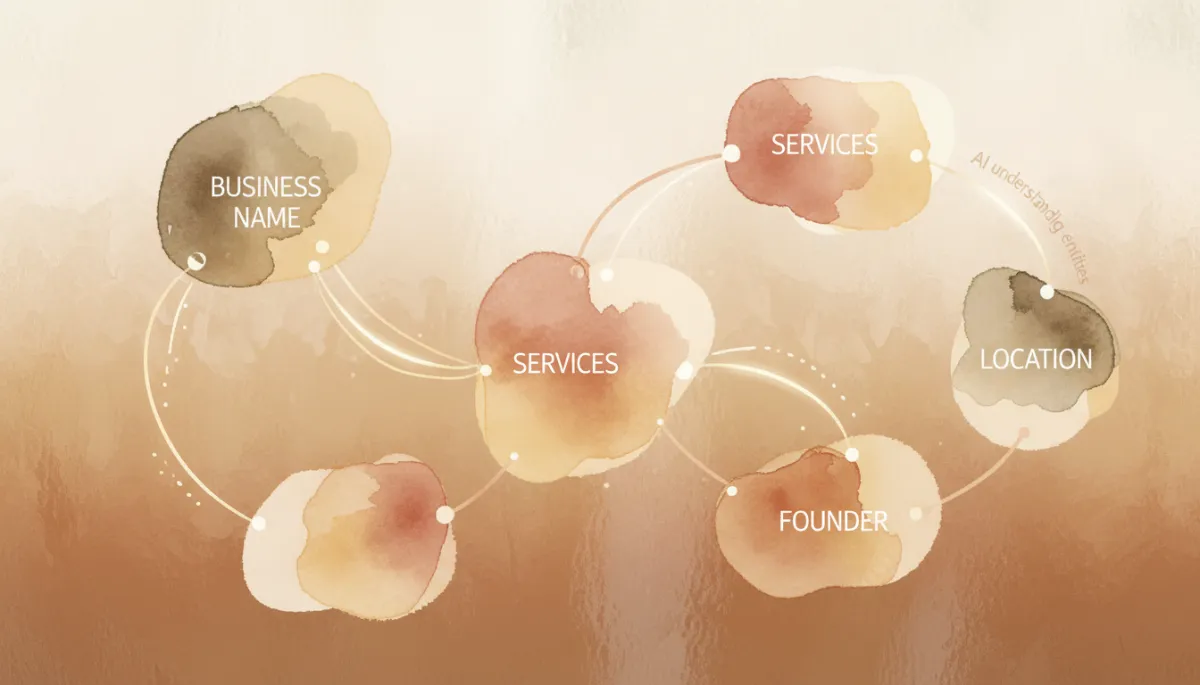
Clean, consistent entity data helps AI connect your brand to the right queries.
8. Citation: Who Vouches for You in the Eyes of AI?
Citation is about who mentions, links to, and references your brand. Just as academic work relies on citations, AI looks for:
Quality backlinks and mentions on trusted sites, directories, and platforms
Consistent NAP (Name, Address, Phone) data across listings for local businesses
9. Topical: Staying Relevant in the Conversations That Matter
Finally, topical authority is about depth and consistency. Are you showing up around the same themes repeatedly, or are you scattered across unrelated topics? AI rewards brands that are clearly the “go-to” for specific problems, industries, or audiences.
📌 Key Takeaway: The ARCHITECT™ Framework doesn’t fight AI—it aligns you with it. Each pillar makes it easier for AI to see you as the right answer and the right recommendation.
What This Means for Agencies and Service Providers in 2026
For marketing agencies, coaches, consultants, and B2B service brands, AI is reshaping both how you get clients and how you deliver for them. Gartner and Digital Applied report that AI is now the backbone of campaign optimization, personalization, and even pricing models. Agentic AI—autonomous workflows that manage campaigns and customer journeys—is moving from pilot to production.
That means your edge is no longer just creative or copy; it’s your ability to:
Design AI-ready offers, funnels, and content ecosystems that AI can understand and recommend
Measure and improve visibility not only on SERPs, but inside answer engines, chatbots, and platform-native AI surfaces
Communicate your value in a way that feels human and authentic while still being structured enough for algorithms

Agencies that design AI-ready visibility systems win better recommendations and better clients.
At DW Conceptz, we fuse human-centered branding with AI and AEO so you don’t have to choose between connection and conversion. You get both—because that’s exactly what the best AI systems reward.
Want to see how visible your brand currently is to AI and answer engines?
Take the AEO Visibility Assessment
Practical Moves: How to Become the Brand AI Loves to Recommend
If you’re a founder, solopreneur, clinic owner, coach, or agency leader, here are concrete steps you can start on this quarter to align with how AI chooses recommendations:
Clarify your core entity data. Make sure your business name, address, phone, website, services, and founder details are consistent across your site, Google Business Profile, LinkedIn, directories, and social platforms.
Answer the questions your buyers actually ask. Build content around real queries: “How do I choose…?”, “What’s the best…?”, “Who is the right… for me?” Use simple, direct language and structure your answers clearly.
Show proof, not just promises. Add case studies, before-and-afters, testimonials, and outcome-focused stories that signal authority and trustworthiness to both humans and AI.
Structure your site around your offers and audiences. Group content by service, industry, or use case so AI can see what you’re truly known for—and who you’re best suited to help.
Lean into ethical, transparent AI use. As Gartner notes, consumer trust is fragile. Be honest about how you use AI, protect privacy, and keep human oversight in your workflows.
💡 Pro Tip: Don’t chase every AI tool. Instead, focus on a visibility system that aligns your brand, content, and tech with how AI already works.
Bringing It All Together: Human-Centered, AI-Ready Visibility
AI is not here to replace your brand. It’s here to filter brands—for your buyers. The question is whether you’ll be filtered in or filtered out. When AI chooses who gets recommended, it’s looking for clarity, consistency, authority, and alignment with real human intent. That’s exactly what the ARCHITECT™ Framework is designed to build.

A clear framework turns AI from a threat into a visibility multiplier.
At DW Conceptz, we partner with entrepreneurs and agencies who are ready to grow with clarity, confidence, and AI-ready strategy —not hustle harder on tactics that algorithms quietly ignore. We combine human-centered branding, ethical AI, and AEO so you can build trust, convert faster, and grow smarter without burning out or blending in.
If you’re ready to move from invisible to recommended, start by understanding where you stand today:
Take the AEO Visibility Assessment
About the Author
Daisy Watkins is the founder and creative strategist behind DW Conceptz and Lumapath.ai, where she helps businesses transform their digital presence through AI visibility strategies and Answer Engine Optimization. She partners with entrepreneurs, agencies, and service-based brands to build AI-ready marketing systems that feel human, honest, and effective.
📞 858.799.0007
📩 [email protected]
🌐 lumapath.ai | dwconceptz.com
About the ARCHITECT™ Framework
The ARCHITECT™ Framework is a proprietary methodology created by Daisy Watkins, founder of DW Conceptz, LLC, for optimizing business visibility across AI-powered answer engines. It is built to help brands speak clearly to both people and algorithms by aligning nine critical pillars:
Authority – Demonstrating expertise, proof, and trust signals
Reach – Expanding your presence where AI and audiences are already looking
Content – Creating structured, helpful content that fuels AI recommendations
Hierarchy – Organizing your ecosystem so AI can understand your offers and priorities
Intent – Aligning messaging and offers with real buyer intent across the journey
Technical – Ensuring your digital foundation is fast, accessible, and machine-readable
Entity – Defining and clarifying who you are in ways AI can reliably recognize
Citation – Building the right mentions, links, and references around your brand
Topical – Owning the themes and conversations that matter most to your ideal clients
The ARCHITECT™ Framework is used to design AI-native visibility strategies that help brands become the obvious recommendation—whether someone is searching on Google, asking a chatbot, scrolling social, or talking to an AI assistant.
© 2025 DW Conceptz, LLC. All rights reserved.
ARCHITECT™ is a trademark of DW Conceptz, LLC.