Zero-Click Searches: Adapting to the New SEO Normal
SEO, Zero-Click Searches, Answer Engine Optimization, AI Visibility
Zero-Click Searches Are the New Normal: What Businesses and Agencies Must Do Now
Zero-click searches aren’t a glitch in Google’s system—they’re the new default experience. For businesses and agencies, that means the rules of visibility, traffic, and conversion have permanently changed. This guide breaks down what’s happening, why it matters, and how to adapt with AI-ready, answer-focused strategies that keep your brand visible even when users never click through.
In 2026, an estimated 60–65% of all Google searches worldwide end without a click to any website, and in the U.S. that number climbs to around 68% (Searchlab, Presenc AI). That means more than half of your potential customers are getting their answers directly on the results page—often from AI Overviews, featured snippets, and knowledge panels—without ever visiting your site.
For entrepreneurs, agencies, and growth-focused brands, this is not just an SEO problem. It’s a visibility problem. It’s an Answer Engine Optimization (AEO) problem. And it’s exactly the challenge DW Conceptz helps clients solve with AI-powered, human-centered marketing strategies that speak to both people and algorithms.
If you’ve been relying on traditional SEO alone, zero-click searches are already eroding your traffic, leads, and revenue. The good news: brands that adapt early can actually gain visibility, authority, and higher-intent conversions—even when users don’t click.
Ready to see how visible your brand really is in this new landscape?
What Are Zero-Click Searches, Really?
A zero-click search happens when a user finds what they need directly on the search results page and never clicks through to a website. Google and other platforms answer the query using:
Featured snippets and instant answers (“What is zero-click search?”)
Knowledge panels and brand info cards (company details, reviews, FAQs)
People Also Ask boxes with expandable Q&A content
Local packs and map results for “near me” searches
AI Overviews and AI-generated answer summaries that blend content from multiple sources
According to multiple 2026 studies, AI Overviews now appear on roughly 42–58% of searches, and when they do, around 83% of those searches end without a click (MarGen, Deep Marketing). At the same time, click-through rates for the #1 organic result can drop by 28–60% when an AI Overview is present (Searchlab, Digital Applied).
📌 Key Takeaway: Zero-click isn’t a small UX tweak—it’s a structural shift. Search engines are becoming answer engines, and your strategy has to evolve with them.
Why Zero-Click Searches Matter for Businesses and Agencies
For years, SEO success was measured by rankings and organic traffic. But when nearly two-thirds of searches never result in a click, traffic alone stops telling the full story. Here’s what that means for businesses and agencies serving them.
1. Less Traffic, But Not Necessarily Less Opportunity
Yes, zero-click searches reduce raw traffic. Informational queries now show zero-click rates of 74–79%, local and navigational queries around 68–73% (Presenc AI, Searchlab). But the brands that appear inside these rich results and AI Overviews often see:
Higher brand recall and authority, even without a click
Increases in direct traffic and branded searches by 20–30% after being cited in AI Overviews (Digital Applied)
More qualified, higher-intent visitors when users do click through
In other words, zero-click searches are squeezing out noise. The clicks that survive tend to be more serious, more ready to buy, and more aligned with your offers—if your brand is visible in the first place.
2. Agencies Must Redefine “SEO Success”
Agencies that report only on rankings and organic sessions are already feeling the pressure. Clients are asking: “Why are we still ranking, but traffic is dropping?” The answer is zero-click behavior—and ignoring it is no longer an option for serious partners.
You now need to measure impressions in SERP features, AI citation share, and brand visibility, not just clicks and positions.
You must show how your work increases qualified leads and revenue, even if total organic sessions decline.
💡 Pro Tip for Agencies: Start educating clients now. Frame zero-click as a shift from “traffic SEO” to “visibility SEO” and “answer engine optimization.” This reframes the conversation around outcomes, not vanity metrics.
3. Local and Service-Based Businesses Are on the Front Line
If you’re a local business, healthcare provider, coach, trainer, or B2B service brand, zero-click is already shaping how prospects discover you. Local and navigational queries show zero-click rates of 58–73%, driven by map packs, call buttons, and built-in booking tools (MarGen, Presenc AI).
That’s not all bad news. It means you can win business without a website click—through calls, direction requests, and direct actions from the SERP. But it also means your Google Business Profile, reviews, FAQs, and structured data must be treated as core marketing assets, not afterthoughts.
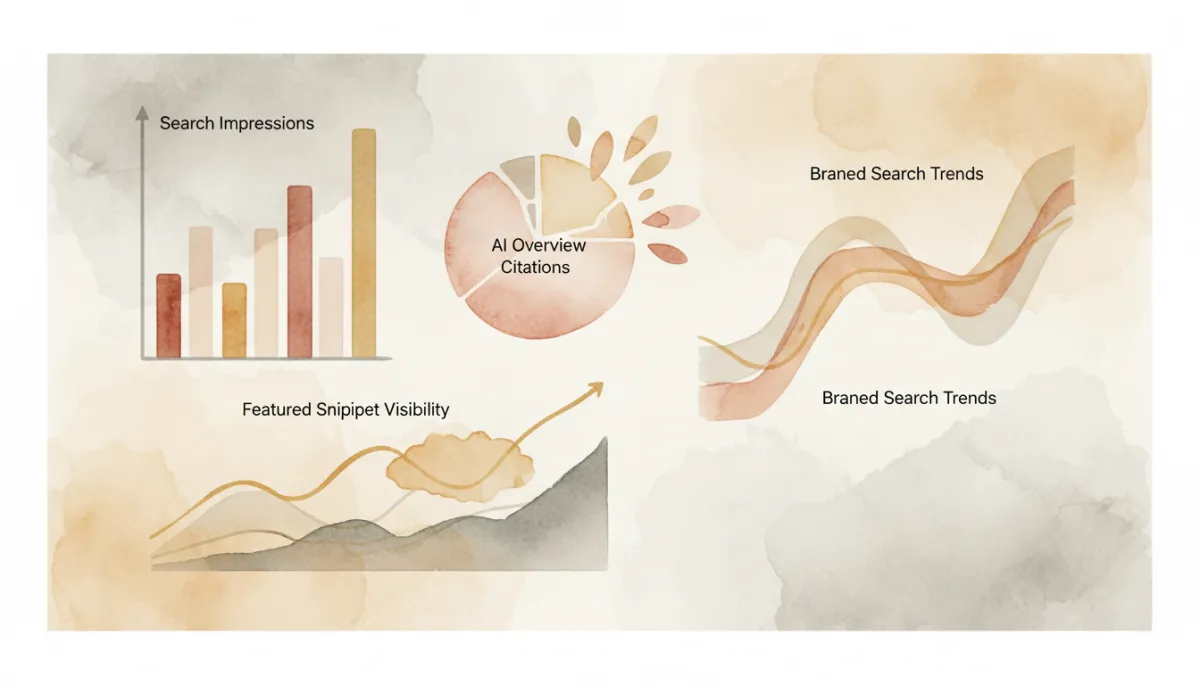
Measuring impressions and AI citations reveals visibility wins that traffic reports miss.
From Search Engines to Answer Engines: Why AEO Matters
As AI Overviews and conversational search become standard, Google, Bing, and AI tools like ChatGPT, Perplexity, and Claude are all behaving less like search engines and more like answer engines. They:
Aggregate information from multiple sources
Summarize and rephrase it in natural language
Decide which brands to cite or reference as trusted authorities
That’s where Answer Engine Optimization (AEO) comes in. Instead of optimizing purely for blue links, you’re optimizing to:
Be understood as an entity (your brand, services, locations, expertise)
Provide clear, structured answers that AI systems can easily surface and trust
Earn citations in AI summaries, featured snippets, and knowledge panels
📌 For Business Owners: You don’t have to understand every technical detail. But you do need a strategy that makes your brand easy for both humans and algorithms to recognize, trust, and recommend.
At DW Conceptz, this is where the ARCHITECT™ Framework comes in—helping brands strengthen Authority, Reach, Content, Hierarchy, Intent, Technical foundations, Entity clarity, Citations, and Topical depth so they can show up consistently in AI-powered experiences.
Want to know if answer engines can actually “see” your brand right now?
How Businesses Can Thrive in a Zero-Click World
1. Shift Your Mindset: From Traffic to Visibility & Trust
The first step is mental. If your only success metric is “how many people visited our site,” you’ll feel like you’re losing—even when your brand is quietly winning visibility and trust inside AI answers and SERP features.
Track impressions by SERP feature (featured snippets, knowledge panels, etc.) using tools like Google Search Console.
Watch branded search volume and direct traffic over time—these often rise as your visibility in AI Overviews improves.
Focus on conversion rate and lead quality, not just raw visit counts.
2. Design Content for Both Humans and Answer Engines
Content that fuels zero-click visibility is structured, clear, and easy to quote. That doesn’t mean robotic or generic—it means intentional. For each core topic you cover:
Start with a concise, 1–2 sentence definition or answer that could stand alone in a snippet or AI summary.
Use clear headings that mirror real questions your audience asks (“What are zero-click searches?” “How do they impact local businesses?”).
Add FAQs with straightforward answers that can be reused by answer engines.
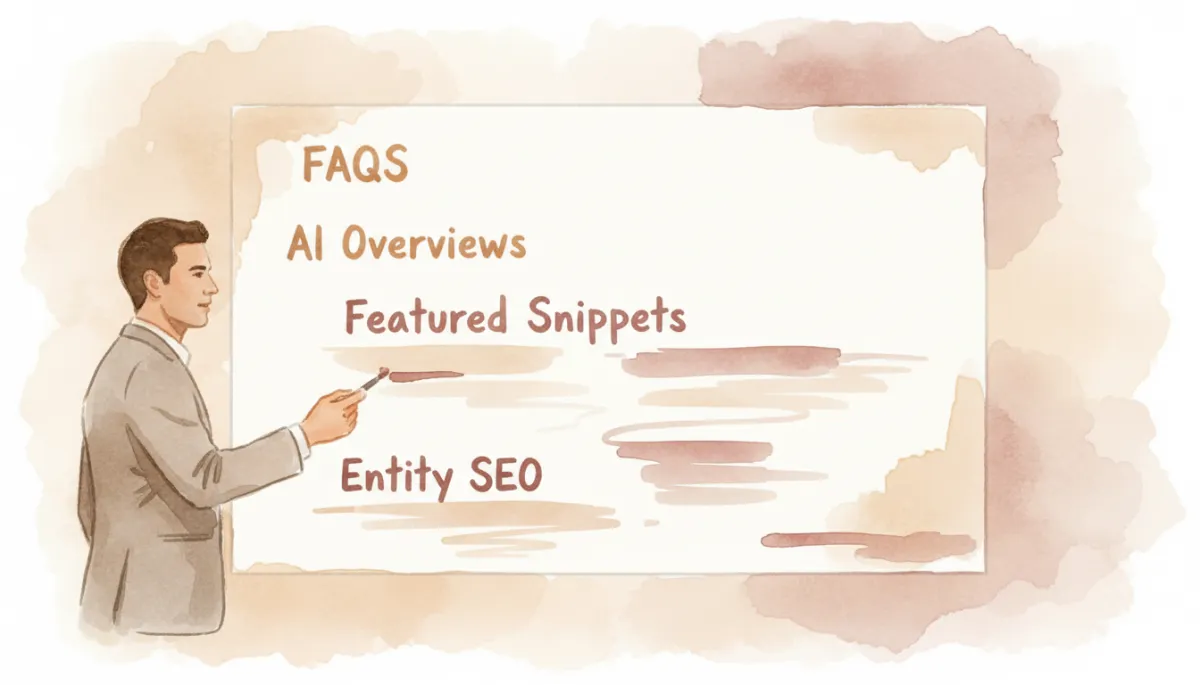
Structuring content around real questions makes it easier for AI to surface your brand.
3. Invest in Content That Can’t Be Fully “Zero-Clicked”
Not all content is equally vulnerable to zero-click behavior. Research shows that tools like calculators and quizzes have zero-click rates as low as 12%, while deep research and case studies also resist full on-page summarization (Searchlab).
Create interactive tools (cost estimators, readiness quizzes, ROI calculators) that users must click to use.
Publish original research, client case studies, and proprietary frameworks—content that’s hard to compress into a single snippet.
4. Strengthen Direct Channels So You’re Not Dependent on Clicks
Zero-click searches are a reminder that you don’t own your search traffic. But you do own your email list, your community, and your client relationships. Use your growing visibility in SERPs and AI Overviews to feed:
Email lists and nurture sequences
Private communities or membership spaces
Webinars, workshops, and discovery calls where you can build real relationships
💡 For Service-Based Businesses: The goal is not just “more clicks.” It’s more qualified conversations. Use SERP and AI visibility to drive consult calls, not just pageviews.
How Agencies Can Lead Clients Through the Zero-Click Shift
1. Educate, Then Rebuild the Reporting Story
Agencies that win in this era will be the ones that tell the truth clearly and confidently. That starts with explaining zero-click trends in simple terms and showing clients:
How global zero-click rates have climbed to 60–65%, and mobile rates to as high as 77% (MarGen, Searchlab).
Why rankings alone no longer guarantee traffic or leads.
Then, rebuild your reporting to highlight:
Growth in impressions and share of voice across SERP features
Increases in branded searches, direct traffic, and conversion rate
2. Integrate AEO and Entity SEO into Your Core Services
Agencies that treat AEO as “extra” will fall behind. Instead, bake it into your core offers:
Make entity optimization (clear brand descriptions, schema markup, consistent NAP data, rich profiles) part of every engagement.
Standardize FAQ and snippet-ready content in all content strategies.
Offer AI visibility audits that review how clients appear in AI Overviews and answer engines—not just traditional SERPs.
Leading agencies now position AEO and AI visibility as core strategic services.
3. Align with Frameworks That Bridge Strategy and Execution
Frameworks like ARCHITECT™ give agencies and in-house teams a shared language for zero-click and AEO work:
Authority & Entity: Are you recognized as the go-to source in your niche?
Content & Topical: Do you cover your subject deeply, clearly, and consistently?
Technical & Hierarchy: Can search and answer engines crawl, parse, and understand your site structure effortlessly?
This kind of structure helps agencies move beyond tactical checklists and into strategic, AI-ready visibility planning that clients can actually understand and approve.
Curious where your brand stands across these pillars today?
Take the AEO Visibility Assessment
The Future: Zero-Click as a Baseline, Not a Threat
Zero-click searches are not going away. As AI Overviews expand and voice search—where over 90% of queries already end in zero-click behavior (MarGen)—becomes more common, we’re moving toward an environment where:
Most simple questions are answered instantly without a site visit.
Brand visibility happens across multiple surfaces—SERPs, AI assistants, chatbots, and more.
Clicks are fewer but more valuable, driven by deeper research, comparison, and purchase intent.
📌 Final Thought: The brands that win will be those that stop fighting zero-click and start designing for it—treating answer engines as partners in visibility rather than enemies of traffic.
Ready to Make Zero-Click Work for You?
Whether you’re a solo founder, a small business owner, a healthcare provider, or an agency leader, your audience is already getting answers from AI and zero-click results. The question is simple:
Are they seeing you there?
At DW Conceptz, we fuse human-centered branding with AI-ready marketing, AEO strategy, and the ARCHITECT™ Framework to help you stay visible, build trust, and grow smarter—without burning out or blending in. Zero-click is the new normal. Your visibility strategy should be built for that reality, not the internet of five years ago.
If you’re ready to see how answer engines currently perceive your brand—and where the biggest visibility gaps and opportunities are—start here:
About the Author
Daisy Watkins is the founder and creative strategist behind DW Conceptz and Lumapath.ai, where she helps businesses transform their digital presence through AI visibility strategies and Answer Engine Optimization. Daisy partners with entrepreneurs, agencies, and service-based brands to build marketing systems that are both human-centered and AI-ready—so they can grow with clarity, confidence, and sustainable momentum.
📞 858.799.0007
📩 [email protected]
🌐 lumapath.ai | dwconceptz.com
About the ARCHITECT™ Framework
The ARCHITECT™ Framework is a proprietary methodology created by Daisy Watkins, founder of DW Conceptz, LLC, for optimizing business visibility across AI-powered answer engines. It gives brands a clear, structured path to becoming the obvious choice in a world dominated by zero-click searches and AI-generated answers.
The 9 Pillars of ARCHITECT™
Authority, Reach, Content, Hierarchy, Intent, Technical, Entity, Citation, Topical
© 2025 DW Conceptz, LLC. All rights reserved.
ARCHITECT™ is a trademark of DW Conceptz, LLC.


